
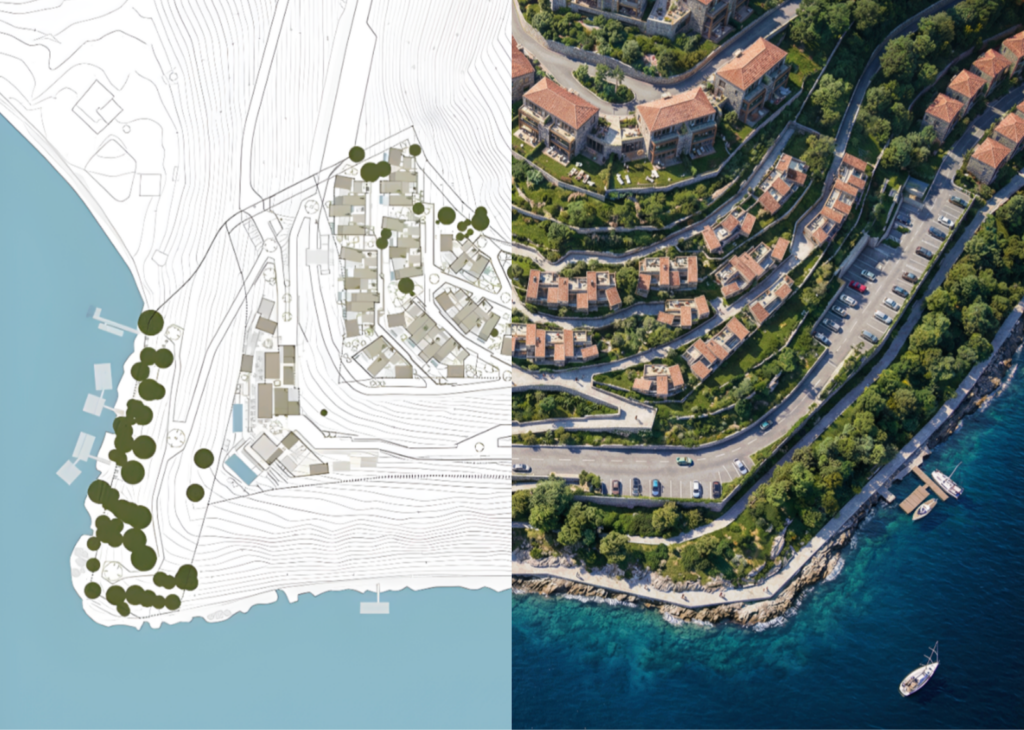
In this guide, we’ll walk you through how to use Masterplan AI with the ArchDiffusion v4.1 engine. You’ll get an overview of the updated interface, explore the latest upgrades, and see sample parameters you can try right away. Let’s get started.
Interface Walkthrough
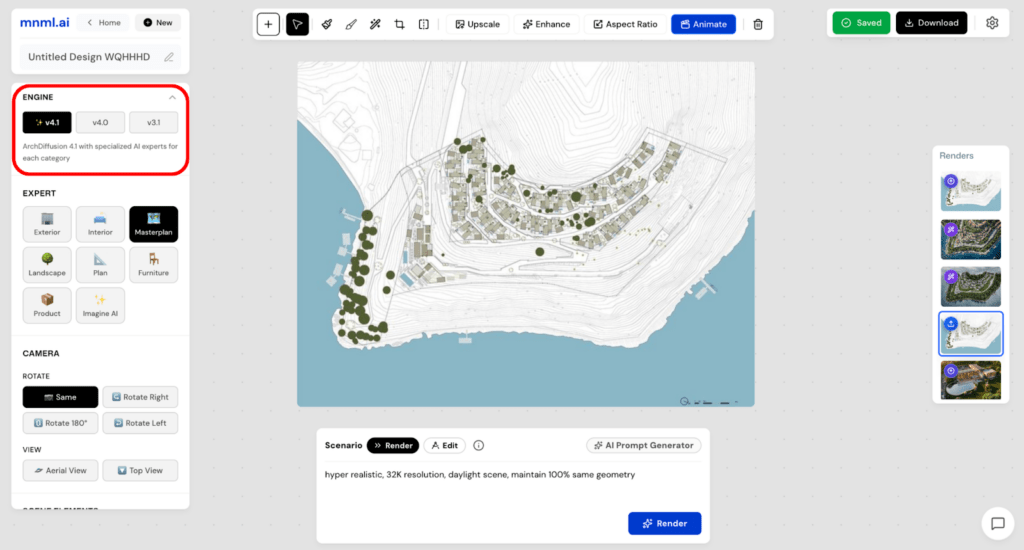
You’ll find the v4.1 engine alongside other engines in the top-left corner of the interface. This is where you choose the version you want to work with.
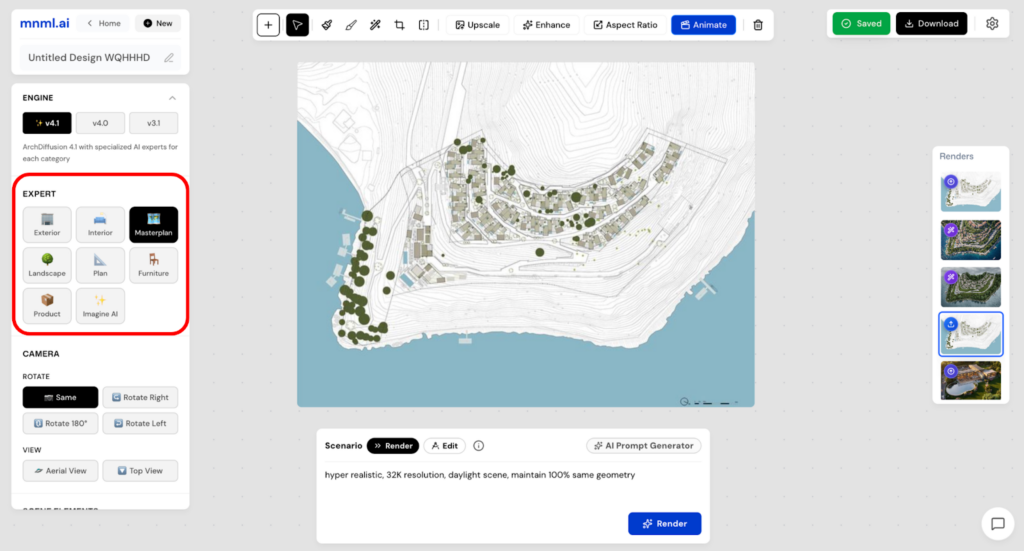
Next is the Expert section. Here, you can define your project type—such as Interior, Exterior, or Masterplan. Selecting the correct project type helps the engine better understand your intent and produce more accurate, relevant results.
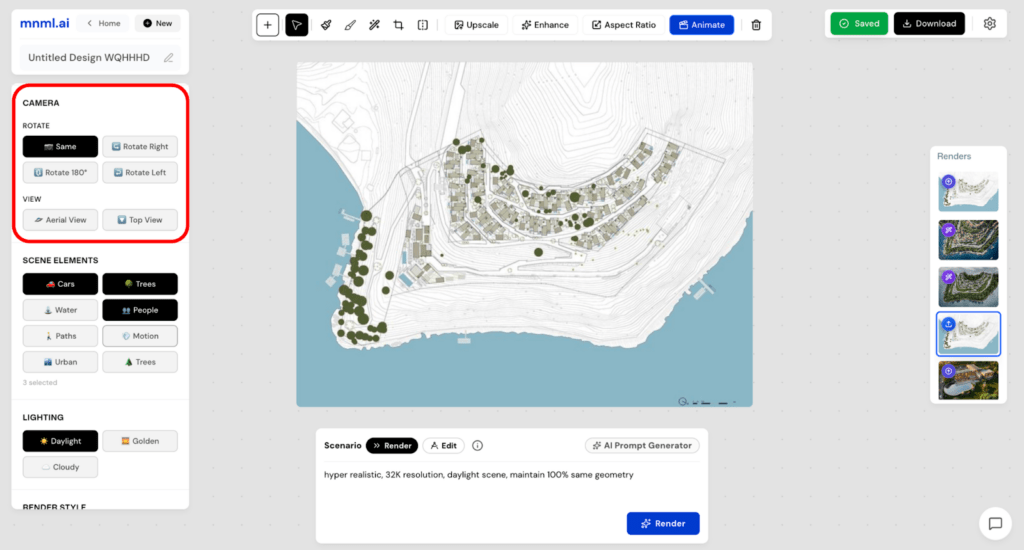
Below that is the Camera section, which includes two settings: Rotate and View. These options let you control the angle and perspective of your image. You can keep the original view or switch to alternatives like a low angle or top view, depending on how you want to present the masterplan.
Another useful built-in feature is Scene Elements. This section allows you to add context and detail to your design, such as cars, trees, people, and more. If an element isn’t available in the list, you can simply type it into the prompt box for complete creative flexibility.
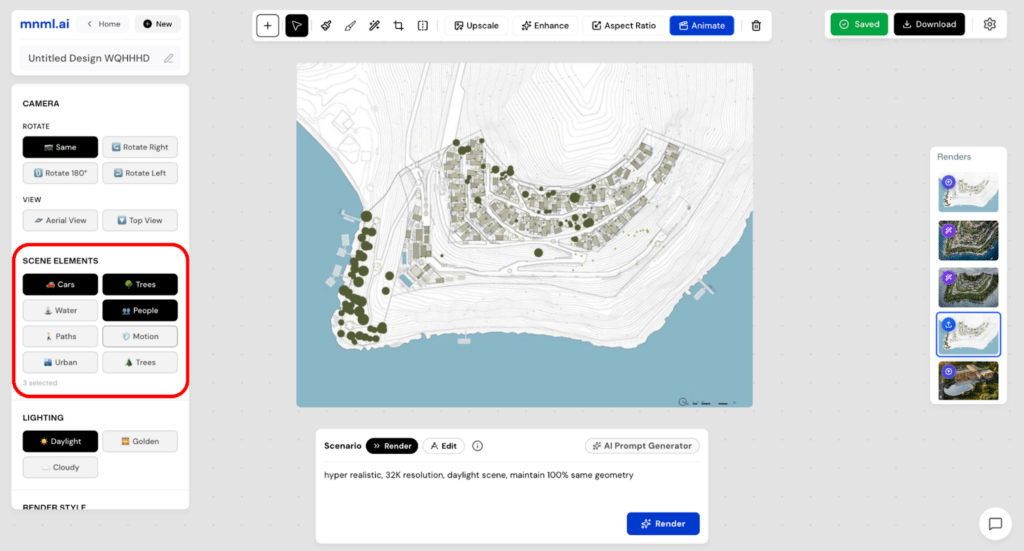
Next is the Lighting section—one of the key upgrades in mnml.ai. This lets you set the overall mood of your render based on the time of day. Options like Daylight, Golden, and Cloudy make it easy to adjust the atmosphere and tone of your masterplan.
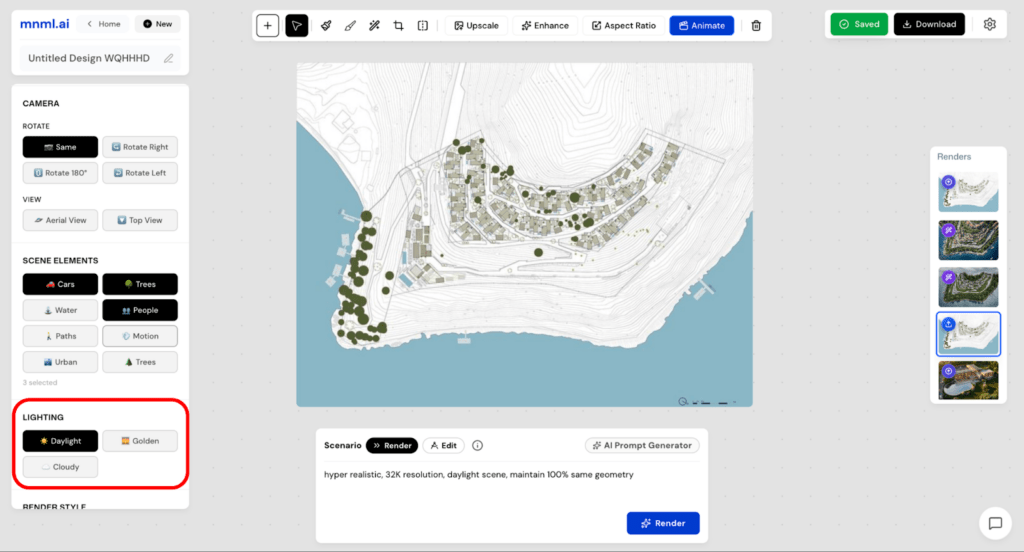
After lighting, move on to Render Style. This setting defines the overall visual appearance of your output. While Realistic is the most commonly used style, you can also explore options like CGI or Sketch to match different presentation needs.
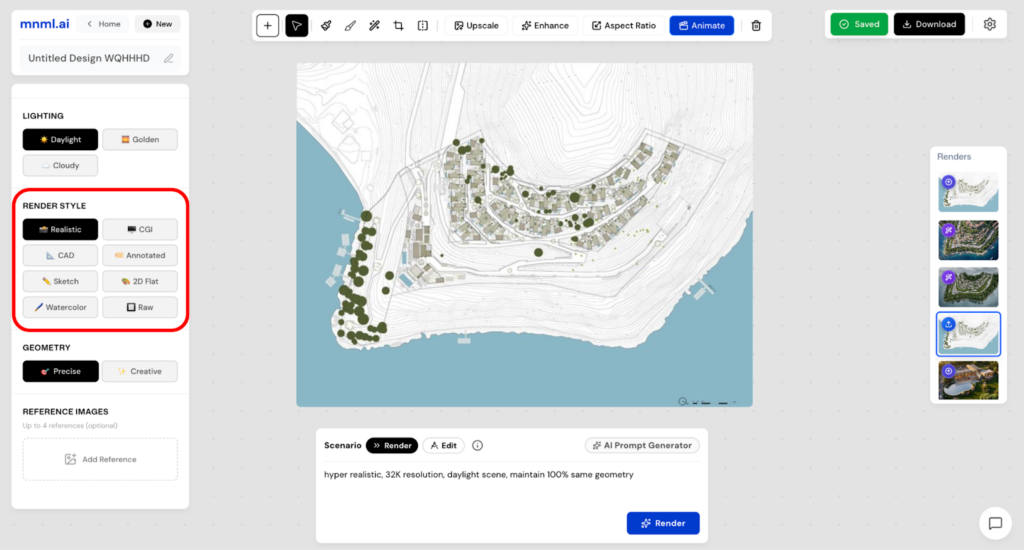
The second-to-last section is Geometry, which has a significant impact on your final result.
- Choose Precise to maintain accurate geometry.
- Select Creative for a more flexible and expressive interpretation.
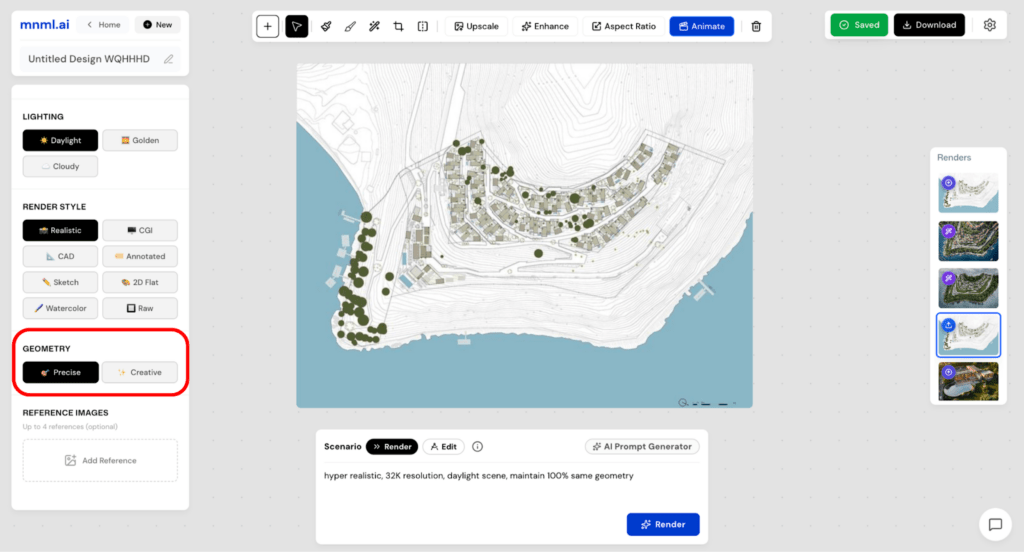
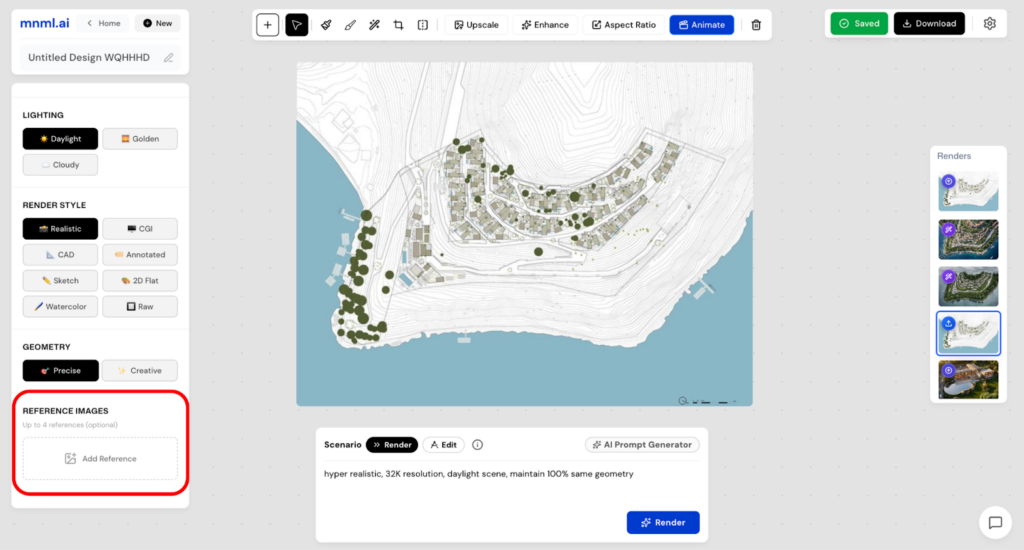
At the bottom of the interface, you’ll find Reference Images. This feature helps guide the AI toward a specific look or style. You can upload up to four reference images to improve consistency and better align the output with your vision.
To complete your setup, head to the prompt box and select a Scenario. Choose Render for a more controlled and accurate result, or Edit if you want greater creative freedom.
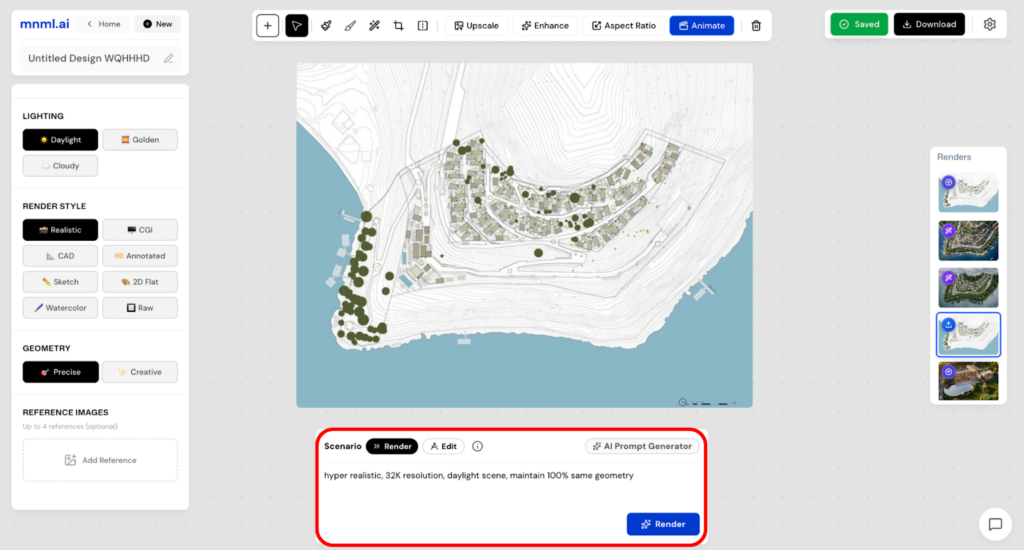
Once everything is set, simply click Render and wait a few seconds to see your masterplan come to life.
Sample Workflows
Now, let’s try sample masterplan design parameters.
Sample 1
Engine: v4.1
Expert: Masterplan
Camera: Same
Screen Elements: None
Lighting: Daylight
Render Style: Realistic
Geometry: Precise
Prompt Scenario: Render
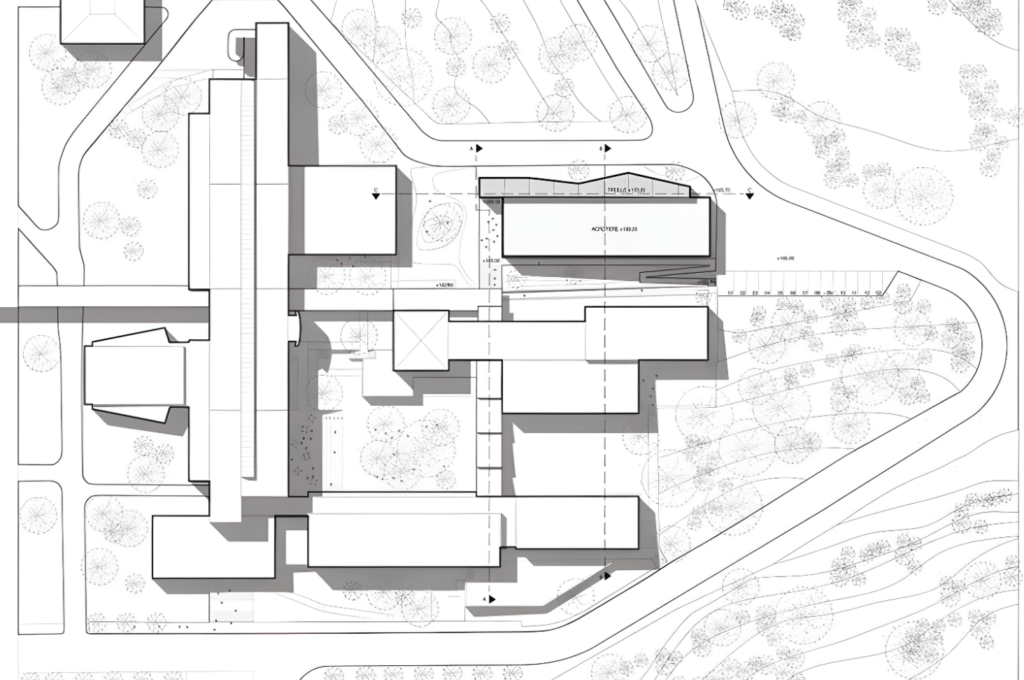
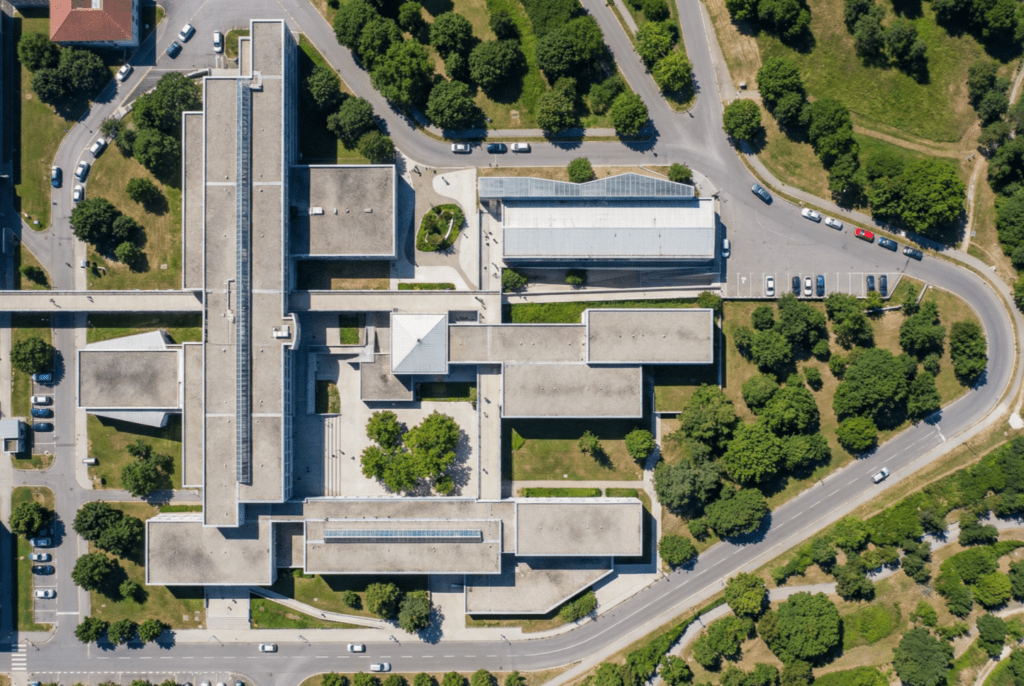
Prompt: Hyper realistic, 32K resolution, daylight scene, maintain 100% same geometry
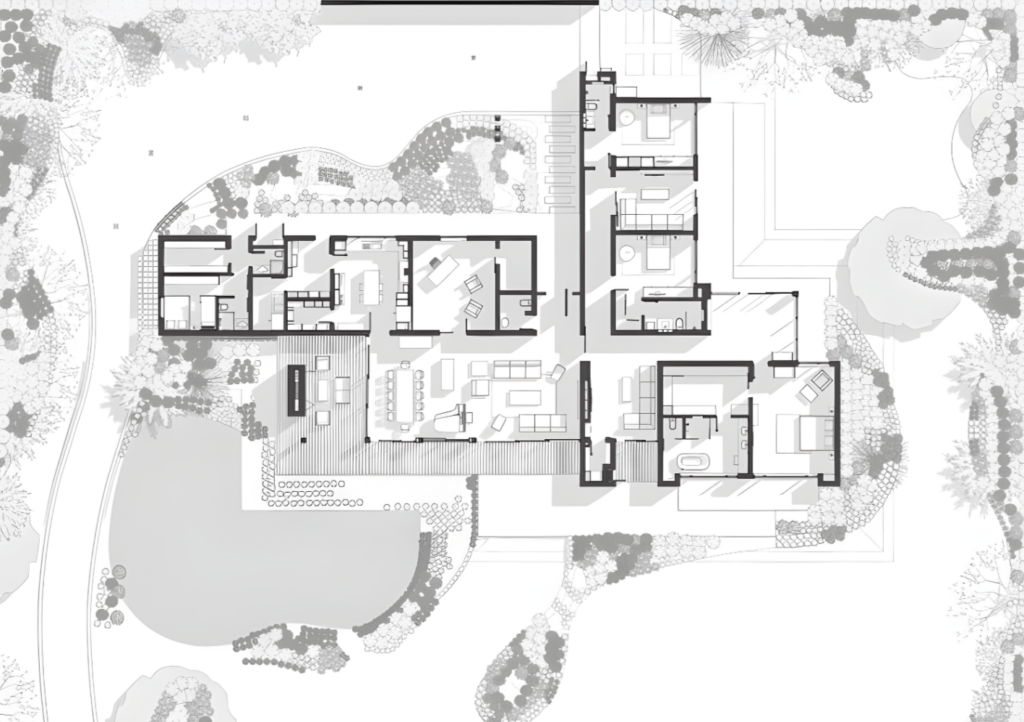
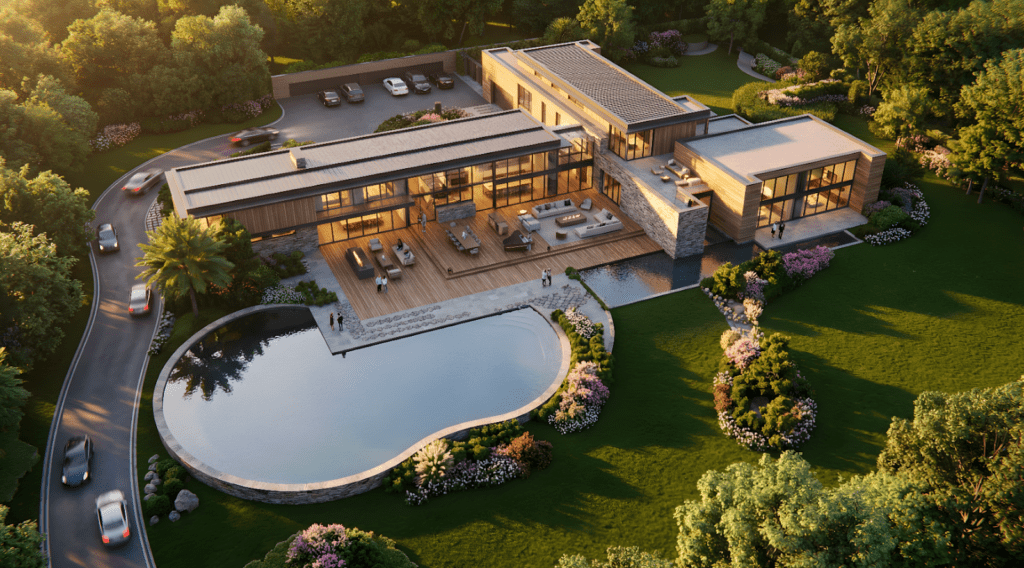
Sample 2
Engine: v4.1
Expert: Masterplan
Camera: Aerial View
Screen Elements: Cars, Trees, Water, People, Motion
Lighting: Golden
Render Style: Realistic
Geometry: Precise
Prompt Scenario: Render
Prompt: Aerial view, hyper realistic, 32K resolution, Golden hour scene, maintain 100% same geometry
Sample 3
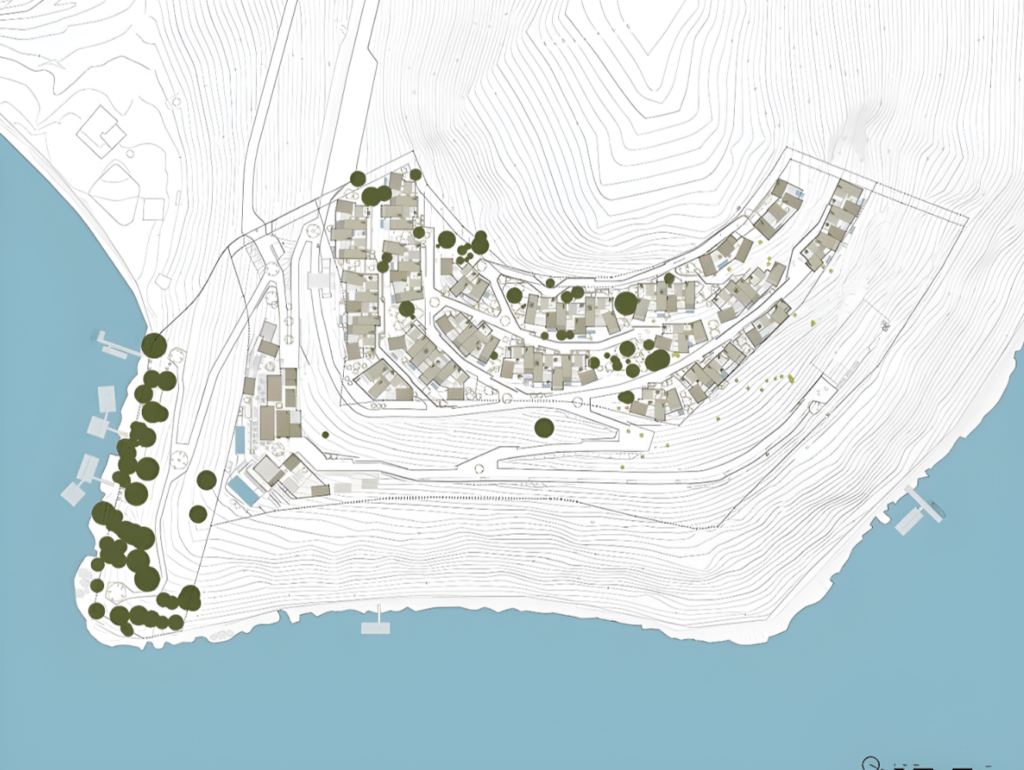
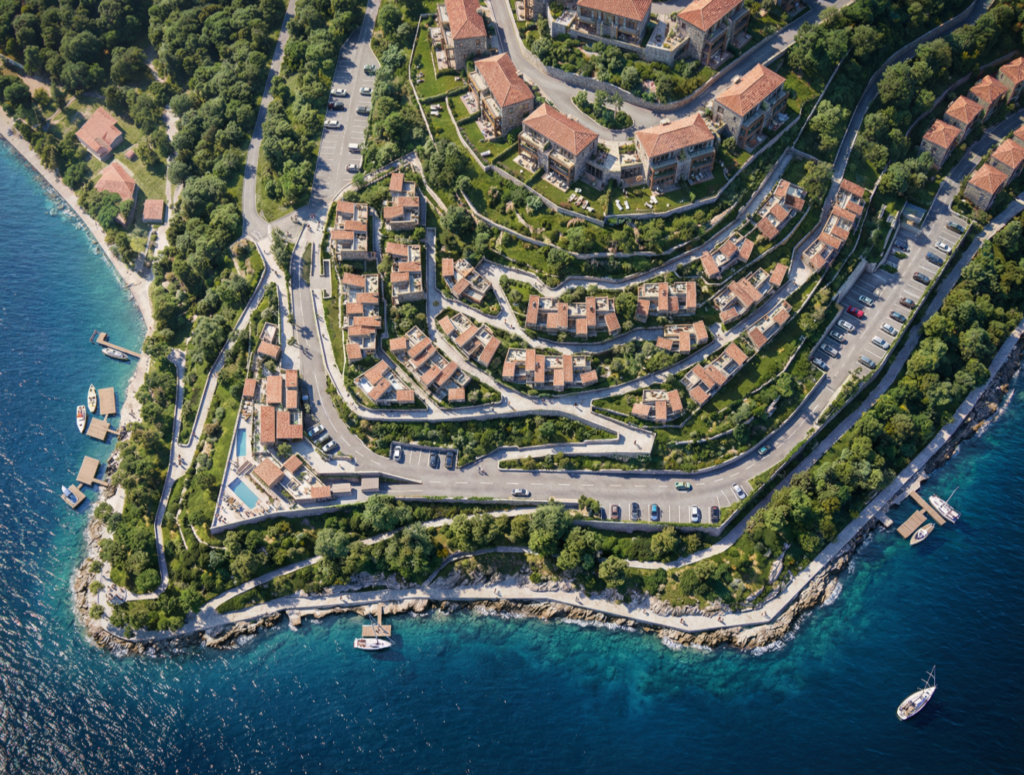
Engine: v4.1
Expert: Masterplan
Camera: Same
Screen Elements: Cars, Trees, People
Lighting: Daylight
Render Style: Realistic
Geometry: Precise
Prompt Scenario: Render
Prompt: Hyper realistic, 32K resolution, daylight scene, maintain 100% same geometry
Final Takeaways
Masterplan with v4.1 has been made simple, flexible, and efficient. With upgraded camera controls, lighting options, scene elements, and geometry settings, you can easily create accurate and visually consistent large-scale designs. By choosing the right parameters and keeping prompts clear, you’ll be able to produce professional masterplan renders quickly and with confidence.